.svg)

.svg)

.svg)
.svg)
.svg)
.svg)
.svg)

.svg)

.svg)
.svg)
.svg)

.svg)

.svg)

.svg)

.svg)

.svg)
December 13, 2025
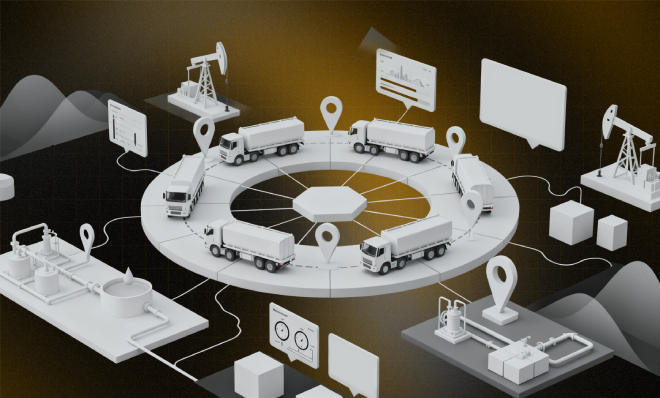
In the fast-paced world of oilfield services, efficient dispatch operations can make the difference between profitable growth and operational chaos.
For companies managing dispatch with spreadsheets, whiteboards, and paper tickets is no longer sustainable.
Modern dispatch software designed specifically for oilfield operations has become essential for maintaining competitiveness and profitability.
The Critical Role of Dispatch in Oilfield Operations
Dispatch sits at the heart of oilfield service operations, coordinating crews, equipment, and resources across multiple job sites. When dispatch runs smoothly, field teams arrive prepared, customers receive timely service, and billing happens promptly. When dispatch struggles, the entire operation suffers from missed opportunities, overtime costs, and delayed revenue.
For mid-market oilfield service companies, the complexity of dispatch operations has grown exponentially.
Managing multiple divisions, tracking specialized equipment, coordinating with various customer requirements, and ensuring compliance with safety regulations all demand more than traditional manual methods can provide.
Essential Features Your Dispatch Software Must Have
1. Real-Time Visibility and Tracking
GPS-Enabled Asset Tracking Know the exact location of every crew, truck, and piece of equipment at any moment. Real-time GPS tracking eliminates the guesswork in dispatch decisions and enables quick response to changing field conditions.
Live Status Updates Monitor job progress as it happens. When field teams update ticket status, dispatch immediately sees the changes, allowing for dynamic resource allocation throughout the day.
Equipment Availability Dashboard View all assets in one place, including maintenance schedules, current assignments, and availability. This prevents double-booking equipment and ensures crews have the tools they need.
2. Automated Communication Systems
SMS and Email Notifications Automatically send job details to field crews' phones, including well locations, customer requirements, and safety information. When tickets move to dispatch status, notifications trigger instantly with all essential details.
Two-Way Communication Enable field teams to confirm or decline assignments directly from their phones. This real-time feedback helps dispatch adjust schedules quickly and ensures accountability.
Customer Updates Keep customers informed with automated notifications about crew arrival times, job completion, and any delays. This transparency builds trust and reduces customer service calls.

3. Intelligent Scheduling and Resource Allocation
Drag-and-Drop Scheduling Interface Visual scheduling boards that dispatchers actually want to use. Move jobs between crews, adjust timelines, and see the impact of changes instantly.
Multi-Division Coordination For companies with multiple service lines, coordinate resources across divisions. See when cementing crews finish so frac crews can start, optimizing equipment utilization.
Conflict Detection Automatically identifies scheduling conflicts, overtime risks, and equipment double-bookings before they become problems. The system should flag issues that human dispatchers might miss.
4. Mobile-First Field Integration
Offline Capability Field crews often work in remote locations without reliable internet. Your dispatch software must function offline, syncing data when connectivity returns.
Digital Ticket Creation Enable crews to create and complete tickets directly from their phones or tablets. Include photo capture for job documentation and voice-to-text for safety notes.
Signature Capture Get tickets signed electronically on-site, eliminating the risk of lost paperwork and accelerating the billing process.
5. Customizable Workflows and Views
Role-Based Dashboards Different team members need different information. Finance wants to see tickets ready for billing, while operations managers need equipment utilization metrics. Customizable views ensure everyone gets relevant data.
Stage-Based Ticket Management Track tickets through their lifecycle from creation to payment. Set up automated triggers when tickets move between stages, keeping all stakeholders informed.
Custom Data Fields Every oilfield service company has unique requirements. Whether tracking specific customer preferences, specialized equipment details, or regional compliance needs, your dispatch software should adapt to your workflow.
6. Integration Capabilities
Accounting System Integration Seamless connection with QuickBooks, SAP, or other accounting platforms eliminates duplicate data entry and reduces billing errors.
Price Book Management Maintain customer-specific rates, automatic price updates, and complex pricing rules within the dispatch system. When creating tickets, correct prices populate automatically.
API Access Modern dispatch software should offer APIs for connecting with other systems, from customer portals to equipment maintenance platforms.
Features That Drive ROI
Billing Acceleration
Companies using modern dispatch software report reducing billing time by up to 75%. When tickets are captured digitally, approved in the field, and automatically flow to accounting, DSO (Days Sales Outstanding) can drop by 30 days or more.
Reduced Administrative Burden
Automation of routine tasks—from sending job details to crews to generating daily reports—frees dispatchers to focus on optimization rather than data entry. This efficiency often allows companies to handle 40% more jobs without adding dispatch staff.
Enhanced Customer Satisfaction
Real-time visibility and automated communications mean customers stay informed without calling dispatch. When service issues arise, dispatch can proactively communicate solutions, turning potential complaints into demonstrations of excellent service.
Implementation Considerations
Start with Core Modules
While comprehensive platforms may offer 25+ modules, start with essential dispatch functionality. Focus on digital ticketing, basic scheduling, and communication features before adding advanced capabilities.
Prioritize User Adoption
The best features mean nothing if teams won't use them. Look for software designed for field workers, not IT departments. Interfaces should work with gloves on, in bright sunlight, and on standard smartphones.
Plan for Scalability
Choose dispatch software that grows with your business. Starting with basic features is fine, but ensure the platform can add inventory management, advanced analytics, and custom workflows as needs evolve.
The Competitive Advantage
In today's oilfield services market, operational efficiency directly impacts competitiveness. Companies still relying on manual dispatch methods struggle with:
- Lost revenue from missing or delayed tickets
- Higher labor costs from inefficient routing
- Customer frustration from poor communication
- Inability to scale without proportionally adding staff
Modern dispatch software addresses these challenges while providing data insights that drive continuous improvement. When every aspect of dispatch operations is digitized and optimized, companies can focus on growth rather than fighting fires.
Taking the Next Step
Transitioning from manual dispatch methods to modern software requires commitment but delivers measurable returns. Look for providers who understand oilfield operations, offer implementation support, and have proven success with similar-sized companies.
The right dispatch software transforms operations from reactive to proactive, from chaotic to controlled, and from paper-based to profit-driven.
For oilfield service companies ready to scale efficiently and serve customers better, investing in purpose-built dispatch software is no longer optional; it's essential for survival and growth in an increasingly competitive market.