.svg)

.svg)

.svg)
.svg)
.svg)
.svg)
.svg)

.svg)

.svg)
.svg)
.svg)

.svg)

.svg)

.svg)

.svg)

.svg)
January 25, 2026
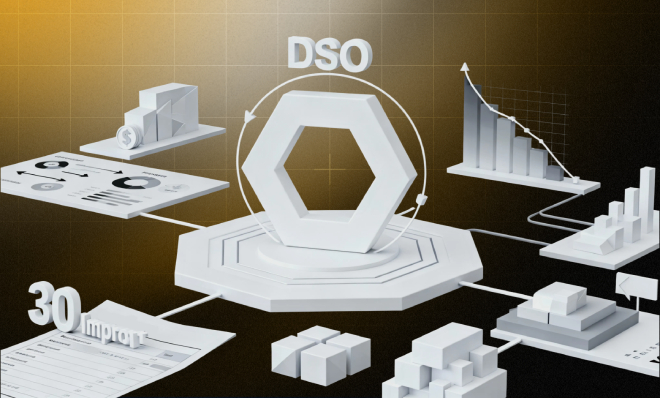
In the oilfield services industry, cash flow is the lifeblood that keeps operations running smoothly. Yet many companies in the $50M-200M revenue range struggle with a common challenge: waiting 60, 90, or even 120 days to get paid for work already completed.
The culprit? Paper-based ticketing systems that create bottlenecks from field to finance.
Days Sales Outstanding (DSO) - the average number of days it takes to collect payment after a sale - directly impacts your company's financial health. For oilfield service companies operating on tight margins, reducing DSO can mean the difference between growth and stagnation.
The True Cost of Paper Tickets in Oilfield Operations
Traditional paper ticketing creates a cascade of delays that push out payment collection:
- Field to Office Lag: Paper tickets sit in truck cabs for days before reaching the back office
- Data Entry Delays: Manual entry of handwritten tickets takes 2-3 days on average
- Error Corrections: Illegible handwriting and missing information require callbacks to field crews
- Customer Disputes: Lost tickets and unclear documentation lead to billing rejections
- Invoice Processing: Creating invoices from paper tickets can take another week
When you add it all up, companies using paper-based systems often see DSO figures exceeding 75-90 days. In an industry where equipment costs are high and payroll runs weekly, this creates significant cash flow pressure.
How E-Ticketing Transforms the Revenue Cycle
Digital field ticketing fundamentally changes how quickly oilfield service companies can convert completed work into cash. Here's how modern e-ticketing systems accelerate collections:
1. Real-Time Data Capture
Field technicians capture ticket information digitally at the job site, including:
- Accurate time tracking (time on location, time in hole)
- Equipment and consumables used
- Customer signatures and approvals
- Job photos and documentation
This eliminates the 3-5 day lag between job completion and office receipt of paperwork.
2. Instant Validation and Error Prevention
E-ticketing systems validate data entry in real-time, preventing common errors that delay billing:
- Required fields ensure complete information
- Dropdown menus eliminate spelling errors and inconsistencies
- Automated calculations prevent math mistakes
- Price book integration ensures accurate rates
Companies report up to 75% reduction in billing rejections after implementing e-ticketing.
3. Automated Workflow from Field to Finance
Once a ticket is completed and signed in the field, automated workflows kick in:
- Tickets sync immediately to the back office (even from offline locations)
- Approved tickets flow directly to billing systems
- Invoices generate automatically with all supporting documentation
- Integration with accounting systems like QuickBooks eliminates manual data entry
This automation can cut billing time from weeks to hours.
4. Enhanced Customer Communication
E-ticketing improves the customer experience and accelerates payment:
- Customers receive tickets immediately via email
- Clear, professional documentation reduces disputes
- Self-service portals allow customers to view invoices and statements
- Multiple payment options streamline the collection process
Real-World DSO Reduction Strategies
Based on industry best practices, here are proven strategies oilfield service companies use to reduce DSO by 30+ days:
Implement a Phased Rollout
Start with your highest-volume operations or most tech-savvy crews. Oil Command's modular approach allows companies to begin with core field ticketing and expand to additional modules as teams adapt.
Set Clear Performance Metrics
Track key indicators weekly:
- Average time from job completion to invoice
- Percentage of tickets requiring rework
- Customer dispute rates
- Collection time by customer segment
Align Sales and Operations
Ensure your sales team understands how payment terms affect cash flow. Consider implementing:
- Incentives for securing favorable payment terms
- Penalties for exceeding credit limits
- Regular communication between sales and collections teams
Optimize Your Invoicing Cadence
Move from monthly to weekly or even daily invoicing cycles. With e-ticketing, there's no reason to wait until month-end to bill for completed work.
Leverage Early Payment Incentives
Offer 1-2% discounts for payments within 10 days. When combined with faster invoicing through e-ticketing, this can dramatically accelerate cash collection.
The Technology That Makes It Possible
Modern e-ticketing platforms designed specifically for oilfield operations include critical features:
- Offline Capability: Sync data when connectivity returns
- Rugged Design: Built for field conditions and safety equipment
- Integration Ready: Connect with existing accounting and ERP systems
- Customizable Workflows: Match your specific operational needs
Oil Command's Frictionless Ticketing System (FTS), for example, includes dispatch dashboards, price book management, field apps, and accounting integration - all designed specifically for oilfield service companies.
Measuring Your DSO Improvement
To calculate your current DSO and track improvements:
DSO = (Accounts Receivable / Total Credit Sales) × Number of Days
For example:
- Before E-Ticketing: AR of $3M ÷ Monthly Sales of $2M × 30 days = 45 days DSO
- After E-Ticketing: AR of $2M ÷ Monthly Sales of $2M × 30 days = 30 days DSO
This 15-day reduction on $2M monthly revenue frees up $1M in working capital.
Implementation Timeline and Expectations
Most oilfield service companies can implement e-ticketing and see DSO improvements within 30 days:
Weeks 1-2: System setup, price book configuration, user account creation Weeks 3-4: Field testing, feedback incorporation, training completion Weeks 5-6: Full rollout, process refinement Week 8+: Measurable DSO reduction begins
Beyond DSO: Additional Benefits
While DSO reduction drives the business case, e-ticketing delivers additional value:
- Operational Visibility: Real-time dashboards show job status and crew locations
- Improved Safety Compliance: Digital JSA forms and incident tracking
- Better Resource Utilization: Data-driven dispatch and scheduling decisions
- Enhanced Customer Relationships: Professional documentation and faster response times
- Scalability: Handle more work without adding administrative staff
Your Path to Better Cash Flow
Reducing DSO by 30 days isn't just a nice-to-have - it's a competitive necessity in today's oilfield services market. Companies that modernize their ticketing and billing processes gain the financial flexibility to:
- Invest in new equipment
- Take on larger projects
- Weather market downturns
- Grow without external financing
The technology exists today to transform your revenue cycle. The question isn't whether to implement e-ticketing, but how quickly you can get started.
Ready to see how e-ticketing can reduce your DSO? Oil Command specializes in helping $50M-200M oilfield service companies modernize their operations. With over 50 successful implementations and a field-first design philosophy, we speak your language and understand your challenges.
Request a demo to see how you can cut billing time by 75% and never lose another ticket.